Around October, the pontoons go quiet and the question becomes how to leave the boat for a few months without coming back to a flat battery, a seized engine and a cabin full of mould. A proper lay-up takes a weekend or two, and it saves a lot of money and misery in the spring.
This checklist covers the essentials for a typical small yacht or motorboat, whether you're staying afloat or coming out onto hardstanding. Your engine and boat manuals come first: where they differ from a general guide like this, follow the manual.
Jersey's maritime climate means winters are milder than most of mainland Britain, and hard frosts are less common. That's why plenty of local boats stay afloat all year. Frosts still happen, though, so drain and protect anything that holds water. The bigger enemies here are damp and winter gales: condensation in a closed-up cabin, and chafe on lines and covers when the westerlies blow through.
Afloat or Ashore?
Keeping the boat afloat means it's ready for a mild winter weekend, and the hull stays wet. It also means checking mooring lines, fenders and bilge pumps regularly, especially after storms. Coming out onto hardstanding takes away the risk of sinking, gives you a chance to work on the hull and lets the boat dry out, but it costs a lift-out and needs proper support. Whichever you choose, check what your insurer requires for the lay-up period. Many policies set conditions on where and how the boat is kept over winter.
The Engine
- Change the engine oil and filter BEFORE the lay-up, not in spring. Used oil contains acids that sit on internal surfaces all winter.
- Inboard diesels with raw-water cooling: flush the raw-water side with fresh water, then run through a non-toxic marine antifreeze (propylene glycol) so none of the water left behind can freeze.
- Check the coolant strength in a freshwater-cooled engine.
- Fill the diesel tank to reduce condensation, and add a fuel biocide or stabiliser to discourage diesel bug.
- Outboards: flush with fresh water, run the carburettor dry or add stabiliser, fog the cylinders if your manual recommends it, and store the engine upright somewhere dry.
- Close the seacocks (except any needed for cockpit drains if staying afloat) and grease them while you're there.
Water Systems and Heads
- Drain the freshwater tank, pipes and water heater. Open the taps and leave them open.
- Pump the heads through with fresh water, then a little marine antifreeze if your manual allows it.
- Empty and rinse the holding tank.
- Pump the bilge dry and clean it. A clean bilge makes new leaks easy to spot.
Batteries
Batteries left discharged over winter can be permanently damaged. Charge them fully, then either take them home or keep them maintained aboard. If you have shore power, a smart maintenance charger keeps them topped up safely all winter. If not, disconnect them so small drains like clocks and alarms can't flatten them.
Damp: The Real Winter Enemy
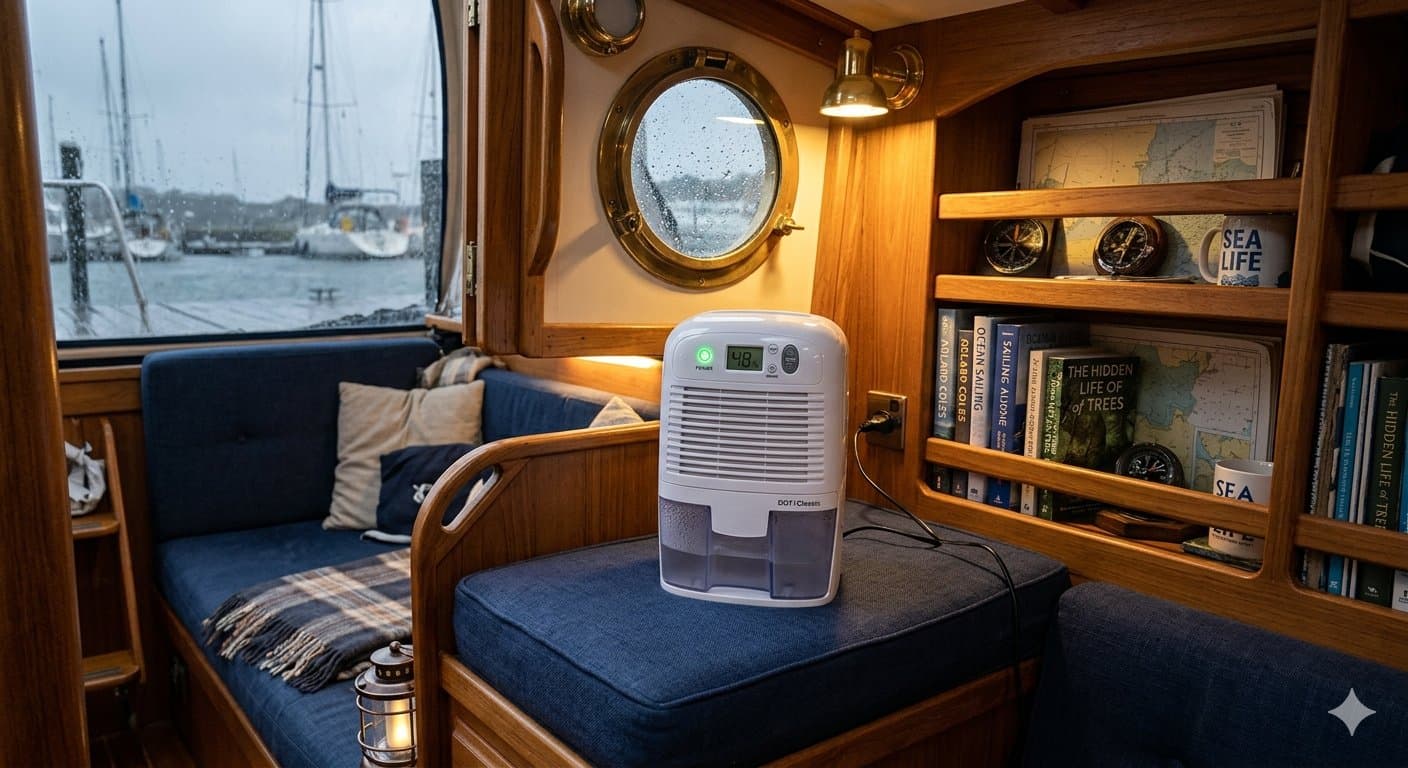
This is where Jersey boats suffer most. A closed-up boat in a mild, wet winter is the perfect environment for mould. Take soft furnishings, cushions, bedding and sails home if you can. Prop the remaining cushions on edge, open all lockers, drawers and the fridge door, and keep air moving.
Sails, Canvas and Deck
- Take the sails off, rinse out the salt, dry them thoroughly and store them somewhere dry. A sailmaker's winter service is a good time to fix small problems.
- Remove sprayhoods, dodgers and cockpit cushions, or at least secure them well. Winter gales find every loose corner.
- Ease the halyards off the mast to stop them slapping, or replace them with mousing lines.
- Wash the decks and check the deck fittings and hatches for leaks. Winter rain will find them.
Covers
A good cover keeps rain off the decks and out of the cockpit, but a cover that doesn't breathe or isn't secured properly can do more harm than good. Choose a breathable fabric, support it so water can't pool, and tie it down well clear of anything it could chafe against.
If You Stay Afloat
- Double up the mooring lines and add chafe protection wherever they cross a fairlead.
- Check the bilge pump and float switch work and the battery feeding them stays charged.
- Visit after every serious blow, or arrange for someone who can.
- On a drying mooring, the boat takes the ground twice a day all winter. Check the mooring and the chafe points regularly.
The Short Version
- Change the oil before the lay-up
- Protect anything that holds water from frost
- Keep the batteries charged or take them home
- Fight damp: take soft furnishings home, open the lockers, dehumidify
- Dry and store the sails, secure the canvas, check for leaks
- Breathable, well-secured cover
- Check on the boat, especially after storms
The damp side of this checklist is the No-Soggy-Bed kit. For more detail, see Best Boat Dehumidifiers and How to Stop Your Boat Smelling Damp.