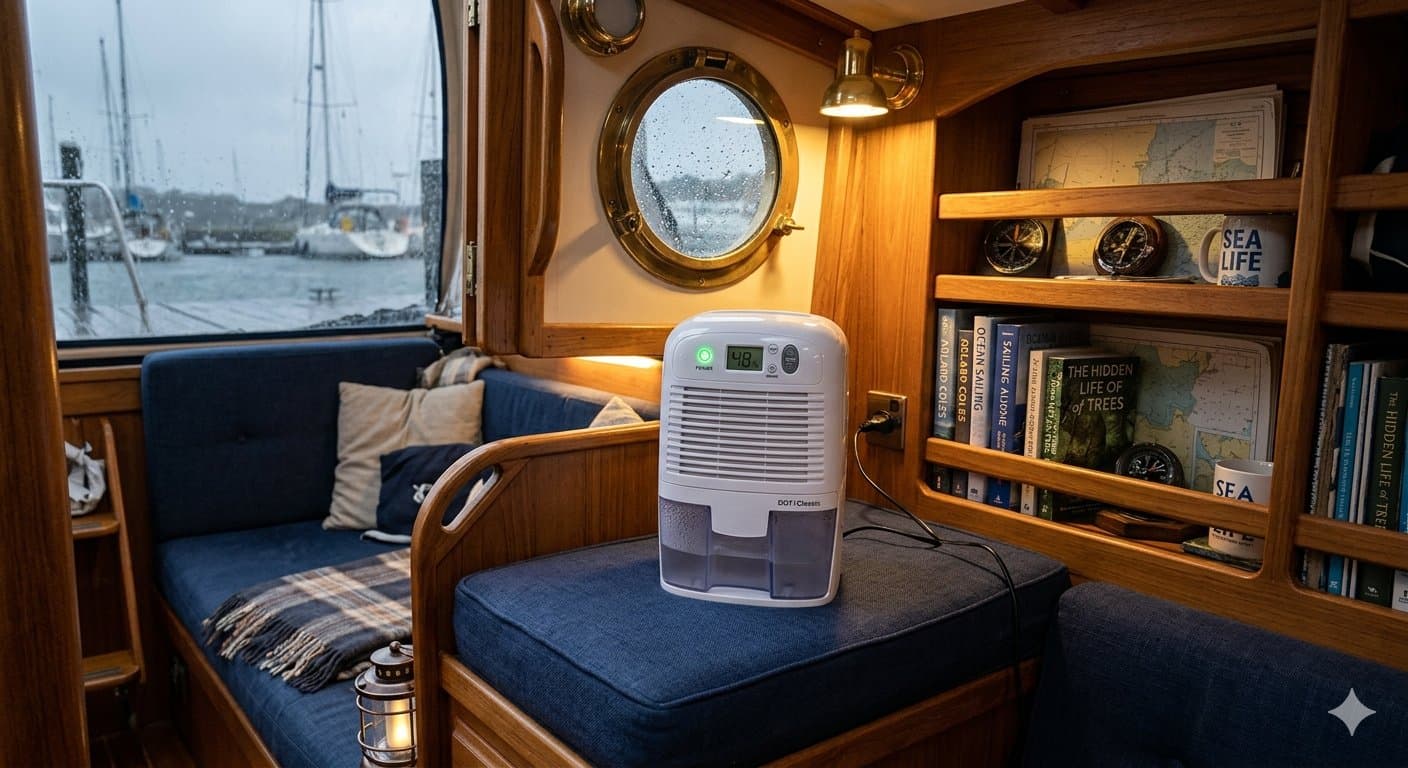
Ask anyone who keeps a boat in Jersey about damp and you'll get a weary look. Mild, wet Atlantic weather, sea mist and boats left closed up between sails all add up to condensation, mildew and that smell when you open the hatch. Dealing with it is basic boat maintenance, especially from October to April.
The single most important decision is the type of dehumidifier, so this guide starts there and then covers the three options that make the most sense for a Channel Islands boat.
Jersey's winters are mild but damp, and a boat's cabin is often colder than the air outside it. That matters, because the most common household dehumidifiers (compressor types) lose much of their effectiveness as temperatures fall towards single figures. On a boat over a Jersey winter, that's most of the season.
Desiccant vs Compressor: The Key Decision
Compressor dehumidifiers work like a small fridge, condensing moisture on a cold coil. They're efficient in a warm room, but as the air cools they struggle and can ice up. Desiccant dehumidifiers absorb moisture with a drying material and keep working down towards freezing. They draw more power, but for a cold, closed-up cabin they're usually the better choice. Passive absorbers use no power at all and are useful for boats left unattended.
The Picks
The Verdict
For a boat in Jersey with shore power over the winter, a compact desiccant unit like the EcoAir DD1 is the safest bet, backed up by a couple of passive absorbers. Without shore power, passive absorbers plus good ventilation are your main tools. Whichever you choose, fix leaks and get wet gear off the boat first. A dehumidifier treats symptoms, not causes.
This is the heart of the No-Soggy-Bed kit. For the full approach, including bedding and airflow, see How to Stop Your Boat Smelling Damp.