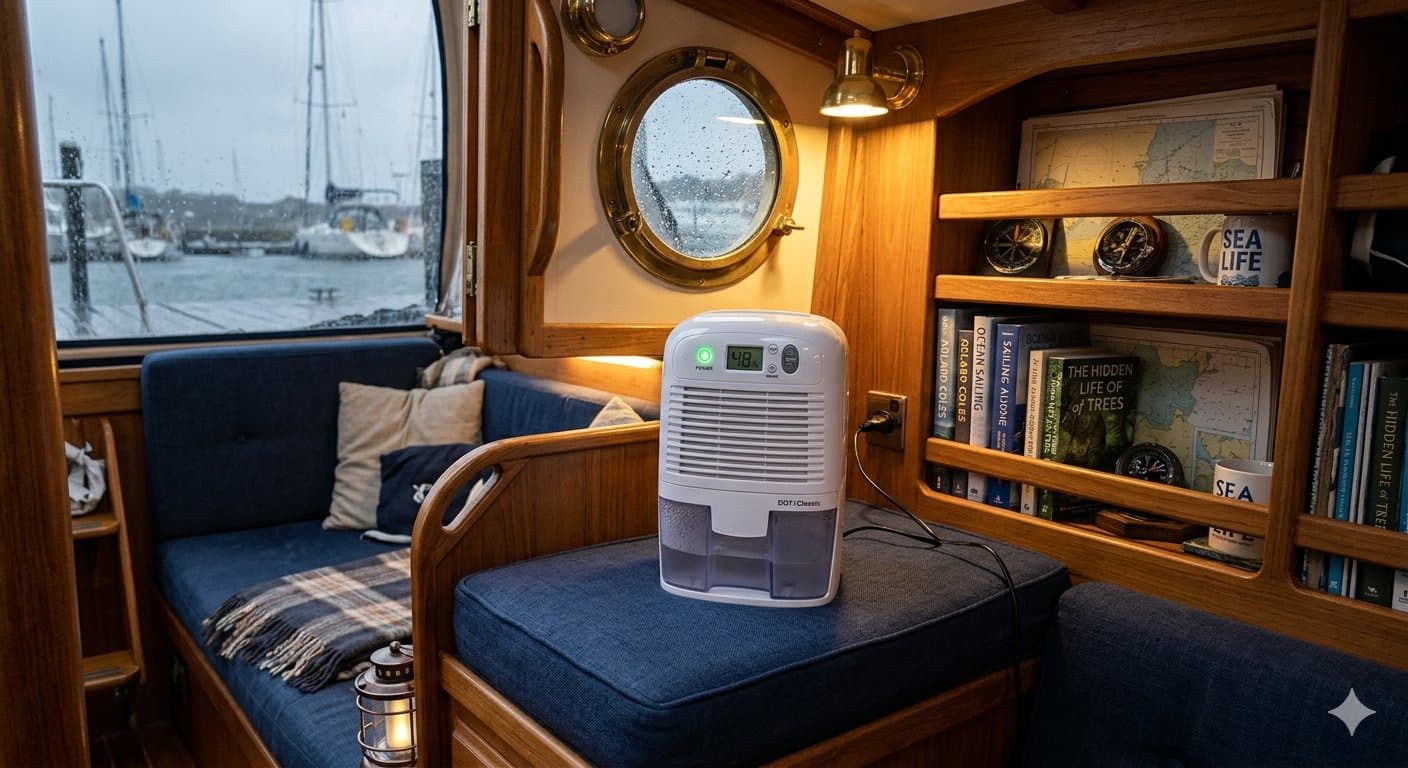
Every boat owner knows the smell: open the hatch after a week away and get hit by diesel, damp and something faintly biological. It doesn't have to be like this. With the right combination of fixes and habits, a boat cabin can stay fresh.
The Channel Islands climate is mild but very moist. Atlantic weather, frequent sea mist and long spells with the boat closed up all push moisture into the cabin. Over winter, when boats can sit untouched for weeks, it builds up fast.
Step 1: Source Control
Before buying anything, find where the water is coming from. Common culprits: leaking deck fittings and windows, hatches that don't seal, wet foul weather gear left below, and the bilge. Fix the leaks and take wet gear home. Everything else treats the symptoms.
Step 2: Active Dehumidification
Step 3: Passive Absorbers
Step 4: Bedding
Step 5: Air Circulation
Moving air is the cheapest cure of all. A small 12V fan on low keeps air moving through the cabin and stops the stagnant pockets where mould starts. Leave lockers and doors open when you leave the boat, and use ventilated hatch covers so you can leave a hatch cracked safely.