Ask what makes sailing around Jersey different and the answer is always the tides. The Channel Islands sit where the English Channel narrows towards the Atlantic, and that funnels huge volumes of water past the islands twice a day. Streams through the Race of Alderney can run at 7 knots or more at springs. Get the timing wrong and you're going backwards. Get it right and you fly.
Jersey has one of the largest tidal ranges in the world, up to about 12 metres at springs. It affects everything: where you can anchor, when you can get in and out of harbour, and whether you'll be afloat or sitting on the sand a few hours later. Tide tables aren't optional here.
Food and Drink on a Passage
For a passage of a few hours, such as St. Helier to Gorey, Sark or the French coast, provisioning is simple: a flask of something hot, rolls, fruit and plenty of water. Prepare as much as you can before you leave the berth, because cooking in a short Channel chop is hard work.
Drying Out
Drying out, letting the boat settle on the bottom as the tide goes out, is a normal part of sailing here. Several Jersey harbours dry completely at low water, including St. Aubin and Gorey, and plenty of local boats are built to take the ground. If you're new to it, learn from someone who's done it locally first: the bottom, the boat's keel and the weather all matter.
The Island Hopping Kit List
- Up-to-date tide tables and tidal stream atlas for the Channel Islands
- Chartplotter AND paper charts
- VHF radio, fixed plus a handheld backup
- Lifejackets for everyone aboard (get these fitted at a chandlery)
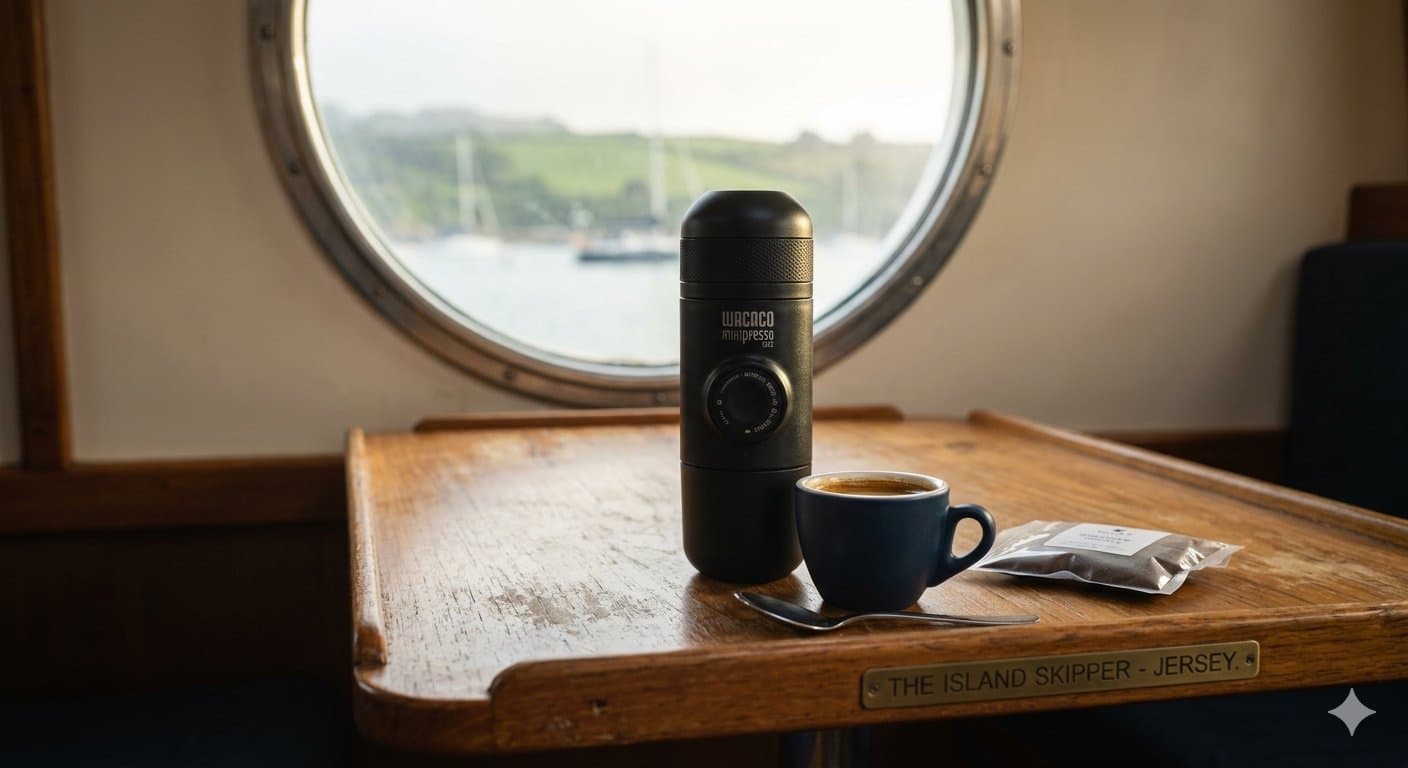
- A good flask and a compact espresso maker
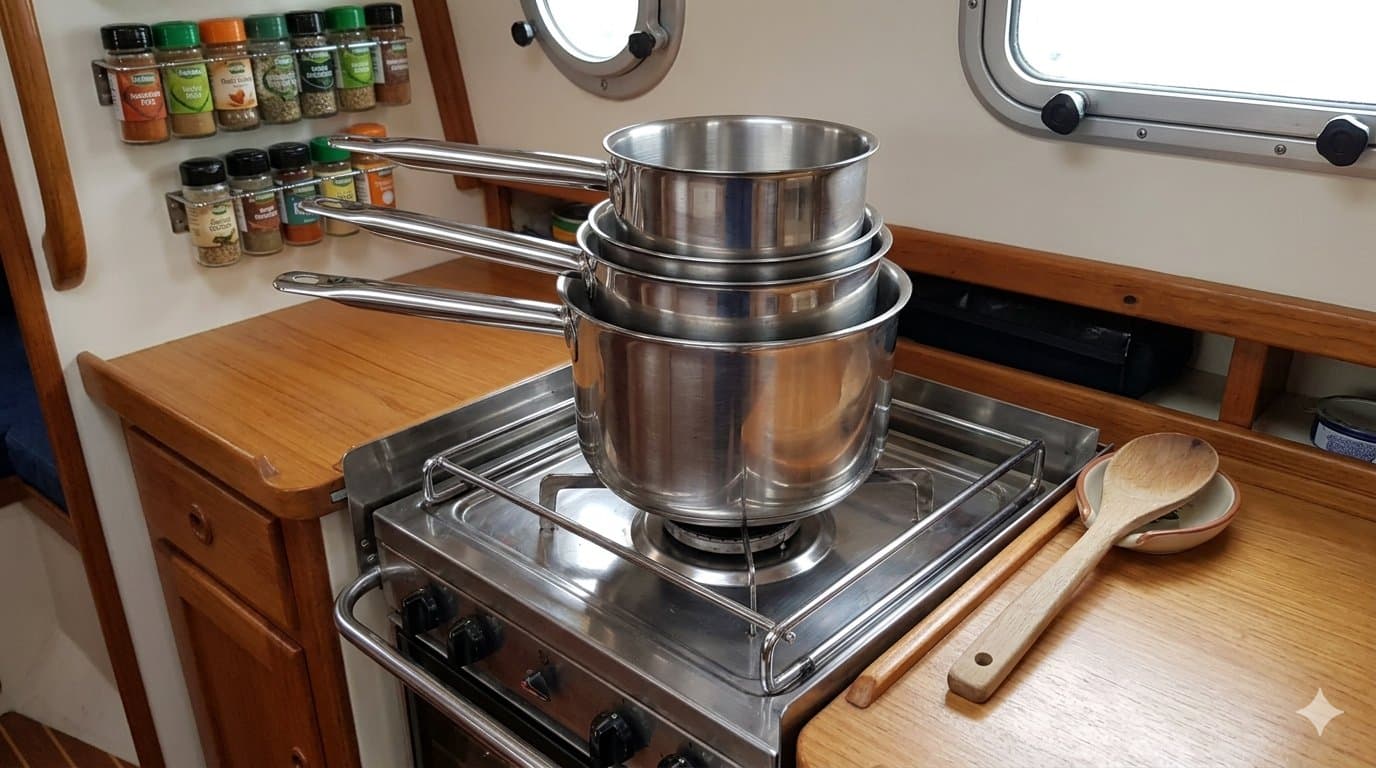
- Nesting cookware
- Boarding ladder if you plan to dry out
- Proper foul weather gear: see the Musto vs Gill vs Henri Lloyd comparison
If you're new to sailing here, an RYA course with a local Jersey sailing school is the best investment you'll make. Local instructors know the tides, the rocks and the harbours in a way no guide can replace.