From Deck to St. Helier and Back
This guide contains affiliate links. As an Amazon Associate I earn from qualifying purchases, at no extra cost to you.
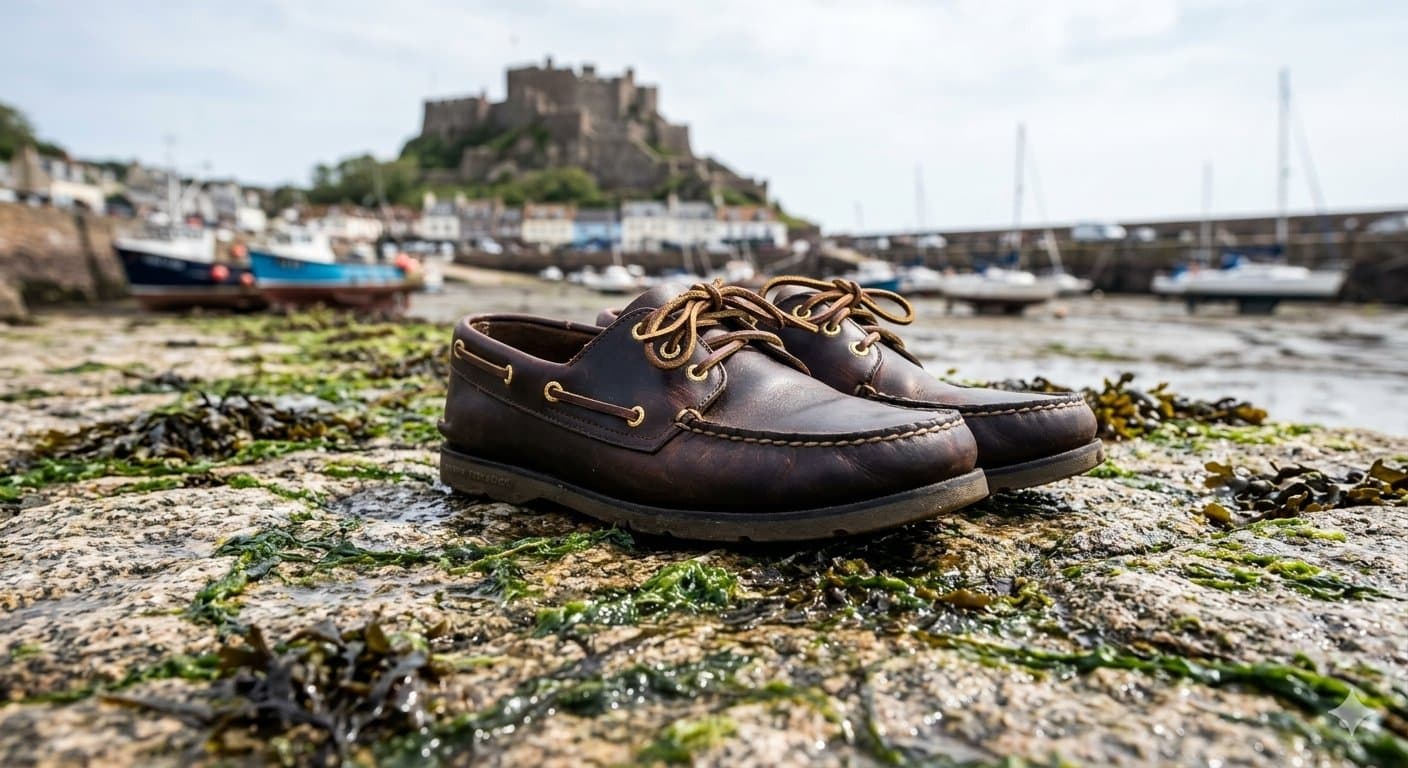
The real test for a deck shoe is wet, weedy granite at low tide, the kind you find on the slipways at Gorey Harbour under Mont Orgueil. A shoe that grips there and on a wet deck is doing its job. A shoe that only looks the part isn't.
Jersey SlipwaysWith a tidal range of up to 12 metres, Jersey's slipways and harbour steps spend half their life underwater, and they come out coated in weed. Whatever you wear, take slipways slowly at low tide. Even the best sole can't grip slime.
What Makes a Good Boat Shoe
Three things: a non-marking sole with fine siping (thin cuts that channel water away so the rubber can grip), uppers that cope with getting soaked, and a fit secure enough that the shoe won't come off when you're moving around the deck.
The Picks
Sperry Top-Sider Gold Cup
The classic, upgraded. Sperry invented the siped deck-shoe sole, and the Gold Cup is its premium version, with better leather and a more cushioned footbed than the standard Authentic Original. It looks right in any marina.
Typical price: Around £130
Check price on Amazon →Sebago Docksides
The European alternative. Traditional hand-sewn construction, a non-marking siped sole, and leather that ages well. A common sight around Channel Islands marinas, and many owners rate it as better made than the Sperry.
Typical price: Around £145
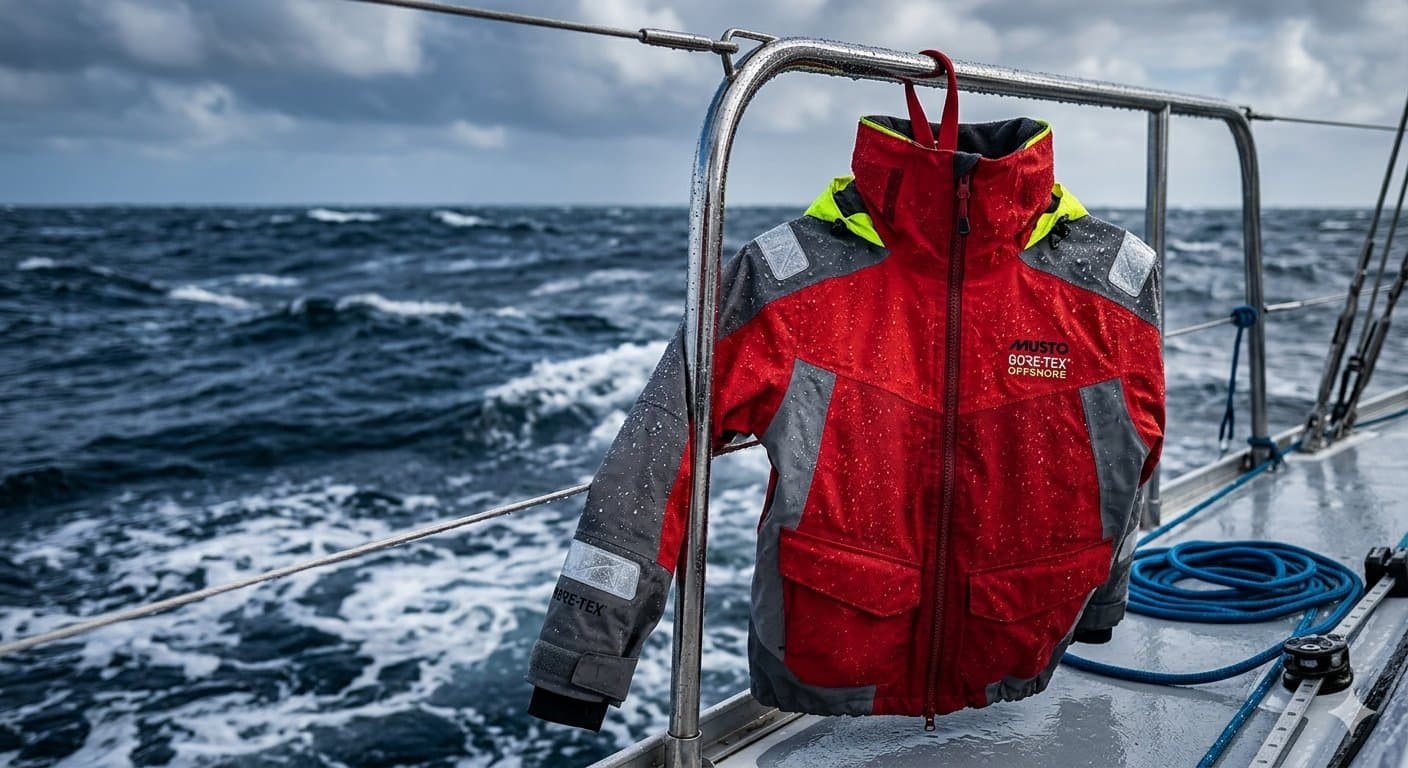
Check price on Amazon →Musto Dynamic Pro II Sailing Shoe
For performance sailing. More of a technical trainer than a classic deck shoe, with more support and a grippier, more modern sole for dinghies, racing and moving around a deck at angles. Less smart off the boat, but better on it.
Typical price: Around £115
Check price on Amazon →After Dark: Après-Sail
The Sperry and Sebago both work off the boat. With chinos and a Breton top for dinner in St. Helier, they look exactly right. The Musto is the one to choose if the sailing matters more than the restaurant.